|
Competitors Required:
|
2
|
|
Description:
|
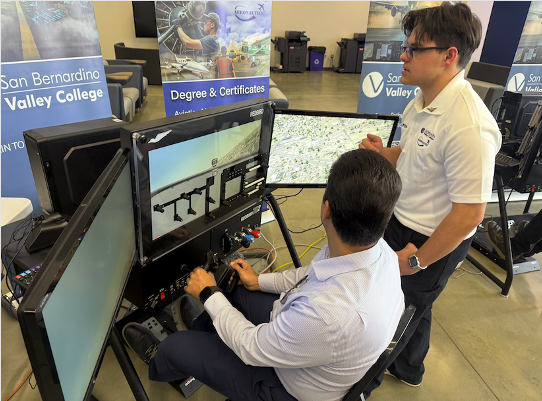
Competitors will use a Redbird TD2 aircraft simulator to perform a reciprocating-engine start and run-up, followed by simulated ATC communications and taxi operations. Teams will be evaluated on checklist compliance, engine indications, communication accuracy, and safe ground operations.
|
|
References:
|
- Applicable Cessna 172 Pilot's Operating Handbook/Aircraft Flight Manual (POH/AFM) for the selected simulator aircraft configuration.
- Applicable Cessna 172 engine-starting, run-up, taxi, shutdown, and securing checklists.
- San Bernardino International Airport (KSBD) airport diagram and applicable published airport information used to establish the simulated taxi route.
|
|
Tools, Equipment, and Materials Provided:
|
Snap-on provided tooling (qty one in each of two pallets unless otherwise indicated): None
|
|
Procedures:
|
-
- Team briefing and station assignment: Each team will report to its assigned simulator station. The judge will provide the standardized briefing, explain the event boundaries and timing rules, and identify the designated team roles. Both stations will use identical instructions and starting conditions.
- Checklist and role coordination: Teams will designate one competitor as the operator and the other as the checklist reader. The checklist reader will call out the applicable steps and support verification of engine indications and procedure completion.
- Engine start: On the judge's signal, the team will begin the assigned engine-start procedure using the applicable checklist. The operator will perform the procedure while the checklist reader verifies completion and monitors for omitted or incorrect steps.
- Engine run-up and indications: The team will perform the prescribed engine run-up in accordance with the applicable aircraft checklist and operating limits. This includes checking magneto RPM drops and the difference between the drops, along with other required engine indications and checklist items. Engine operating limits and evaluation criteria will be established for the selected simulator configuration before competition.
- Ground-control communication: After completing the required engine checks, the team will contact the simulated ground controller as directed. The judge/controller will issue standardized taxi instructions. The team must provide appropriate readbacks, follow the assigned route, maintain situational awareness, and comply with all applicable taxiway and runway hold-short instructions.
- Taxi to the designated destination: The team will taxi from the designated starting area near the KSBD main terminal toward the specified Luxivair/Executive Jet Maintenance hangar area. The exact simulated route, required communications, and any runway crossings or hold-short points will be defined in the event's controller script and route reference. No team will receive a different route or more favorable instructions.
- Event completion: Following practice runs, the host will establish one official endpoint before the competition. The endpoint will be either:
- Option A: The aircraft reaches the designated hangar-area stopping point and is brought to a controlled stop; or
- Option B: The aircraft reaches the designated parking position and the team completes the required shutdown and securing checklist.
The same endpoint and completion standard will apply to every team.
|
|
|
|